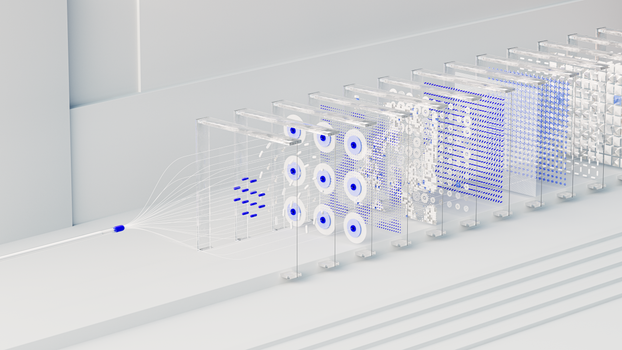
The Internet of Things (IoT) is transforming the way we live and work, connecting billions of devices worldwide to collect, exchange, and analyze data. By 2025, it is estimated that there will be over 30 billion IoT devices in use globally. But behind the seamless exchange of information lies a sophisticated network architecture, with each layer playing a distinct and critical role. Understanding the functions of different IoT network layers not only helps demystify how these systems work but also highlights the importance of well-designed protocols and infrastructure in ensuring reliability, efficiency, and security.
The Role of Layered Architecture in IoT Networks
The concept of layering in network architecture is fundamental to how IoT systems operate. Much like the classic OSI (Open Systems Interconnection) model for computer networks, IoT networks are often structured into several logical layers, each with specific tasks and responsibilities.
Why is this approach so crucial for IoT? The answer lies in the complexity and diversity of IoT devices—ranging from tiny sensors in industrial machines to smart home appliances and wearable fitness trackers. Layered architecture enables modularity, making it easier to develop, maintain, and scale IoT solutions. It also allows for the integration of new technologies or protocols at one layer without disrupting the entire system.
Typically, IoT network layers include: 1. Physical Layer 2. Data Link Layer 3. Network Layer 4. Transport Layer 5. Application LayerSome models expand this basic structure, adding layers for device management, security, or service enablement. Each layer has a unique function and set of protocols tailored for IoT’s varied requirements.
The Physical Layer: Foundation of IoT Connectivity
At the base of any IoT network lies the physical layer. This layer deals with the actual hardware components and physical means of data transmission—think wires, radio waves, and optical signals. In the IoT context, the physical layer is where sensors, actuators, and communication modules reside.
Key functions of the physical layer in IoT include: - Transmission and reception of raw bit streams - Signal modulation and demodulation - Frequency selection and management - Power consumption optimizationIoT devices often operate under strict power and size constraints. For example, a battery-powered environmental sensor may need to transmit data over low-power wireless standards such as Zigbee or LoRaWAN. According to a 2023 IoT Analytics report, over 50% of IoT devices rely on wireless connectivity, with short-range standards like Bluetooth Low Energy (BLE) and Wi-Fi being the most prevalent.
Physical layer technologies in IoT are chosen based on factors like range, data rate, power consumption, and cost. For instance, Zigbee offers low power consumption ideal for smart home sensors, while NB-IoT provides wide-area coverage suited for utility metering.
The Data Link Layer: Reliable Data Transmission
Sitting above the physical layer, the data link layer is responsible for ensuring reliable point-to-point or point-to-multipoint data transfer over the physical medium. In IoT, this layer handles error detection and correction, medium access control, and device addressing.
Main functions include: - Framing of data for transmission - Managing access to the communication channel (e.g., who “talks” when) - Detecting and correcting errors introduced at the physical layer - Device identification within a local networkThe data link layer is vital in environments where multiple devices share the same communication medium, such as a smart lighting system using Zigbee. Protocols like IEEE 802.15.4 (used by Zigbee and Thread) and IEEE 802.11 (Wi-Fi) define how devices coordinate access and avoid collisions.
An example: In a smart factory, dozens of wireless sensors may be competing for bandwidth on the same 2.4 GHz frequency. The data link layer’s medium access control mechanisms prevent data collisions and ensure each device gets a turn to communicate, maintaining efficiency and reliability.
The Network Layer: Routing and Addressing in IoT
The network layer is responsible for moving data across complex topologies and connecting devices across different networks. In IoT, this becomes particularly important as devices often operate in large, distributed environments.
Key functions of the IoT network layer: - Device addressing (assigning unique identifiers, such as IPv6 addresses) - Routing data packets across networks - Supporting mobility and dynamic network topologies - Handling data aggregation and filteringOne of the challenges unique to IoT is the sheer volume of devices—traditional IPv4 addressing is insufficient, so the adoption of IPv6 is critical. IPv6 supports 340 undecillion addresses, more than enough for every IoT device imaginable.
Routing in IoT can be complex. For example, Low-power and Lossy Networks (LLNs) in industrial settings often use the RPL (Routing Protocol for Low-Power and Lossy Networks), designed for networks where devices may frequently join, leave, or fail.
Addressing and routing protocols enable IoT devices to communicate not only within the same network but also across the internet, integrating with cloud platforms and other enterprise systems.
The Transport Layer: End-to-End Communication
The transport layer provides end-to-end communication services for applications, ensuring that data sent from one device arrives reliably and in order at its destination. In traditional networks, protocols like TCP (Transmission Control Protocol) and UDP (User Datagram Protocol) are used.
For IoT, the choice between TCP and UDP—or specialized alternatives like MQTT or CoAP—depends on application requirements:
- TCP offers reliable, connection-oriented communication, suitable for applications where data integrity is critical but may be too resource-intensive for constrained devices. - UDP is lightweight and connectionless, ideal for scenarios where speed is more important than perfect reliability (e.g., real-time sensor updates). Some IoT-specific protocols at this layer include: - MQTT (Message Queuing Telemetry Transport): A lightweight publish/subscribe protocol optimized for low-bandwidth, high-latency networks. - CoAP (Constrained Application Protocol): Designed for simple, constrained devices, using UDP for efficiency.The transport layer also manages flow control, congestion avoidance, and error recovery, all essential for the smooth operation of IoT applications.
The Application Layer: Enabling Smart Solutions
At the top of the stack is the application layer, where data is transformed into actionable insights and user-facing services. This layer encompasses a wide range of protocols and standards, tailored to specific IoT use cases and industries.
Example functions of the application layer: - Device data formatting and translation (e.g., JSON, XML) - Command and control of devices - Secure data exchange and authentication - Integration with cloud services and third-party applications Popular IoT application layer protocols include: - HTTP/HTTPS: Common for web-based IoT dashboards - MQTT and CoAP: As mentioned, these also operate here for device-to-cloud and device-to-device messaging - DDS (Data Distribution Service): Used in industrial IoT for real-time data sharingThe application layer is where the “smart” in smart devices becomes apparent—enabling predictive maintenance in factories, automating lighting in homes, or supporting remote health monitoring.
Comparing IoT Network Layer Functions: A Table Overview
To better visualize the unique roles of each IoT network layer, consider the following comparison:
| Layer | Main Function | Example Protocols/Technologies | IoT-Specific Considerations |
|---|---|---|---|
| Physical | Physical signal transmission | Zigbee, LoRaWAN, BLE, Wi-Fi | Low power, size constraints, range |
| Data Link | Reliable local data transfer | IEEE 802.15.4, Ethernet, Wi-Fi MAC | Error handling, medium access, device addressing |
| Network | Routing & addressing | IPv6, RPL, 6LoWPAN | Scalability, dynamic topologies, cross-network communication |
| Transport | End-to-end communication | TCP, UDP, MQTT, CoAP | Resource constraints, reliability vs. efficiency |
| Application | User-facing services & data processing | HTTP, MQTT, CoAP, DDS | Interoperability, security, cloud integration |
Security and Management Across IoT Network Layers
Security in IoT networks cannot be confined to a single layer—it must be addressed throughout the stack. Each layer introduces unique vulnerabilities:
- At the physical layer, devices can be tampered with or intercepted. - The data link and network layers face threats like spoofing, eavesdropping, and denial-of-service attacks. - The transport and application layers are susceptible to data breaches, unauthorized access, and malware.According to a 2022 survey by Kaspersky, 43% of organizations using IoT experienced at least one security incident related to device connectivity. Secure IoT design calls for encryption, authentication, and regular updates at every layer. Protocols such as TLS/DTLS (for transport security) and device whitelisting (at the application layer) are common best practices.
Additionally, device and network management functions—sometimes considered a separate “management layer”—are essential for monitoring device health, updating software, and enforcing security policies.
The Future of IoT Network Layer Design
As IoT ecosystems continue to grow, the demands on network layers will increase. Emerging trends include:
- Integration of edge computing, where data processing happens closer to devices, reducing latency and bandwidth usage. - Adoption of AI-driven network management for automated threat detection and optimization. - Enhanced interoperability standards, enabling devices from different manufacturers to communicate seamlessly.With 5G technologies promising ultra-reliable, low-latency connections, future IoT networks may see shifts in how traditional layers interact, especially at the physical and network levels. Staying informed about the functions and evolution of these layers is key for anyone involved in building, using, or securing IoT systems.