The Latest Innovations in AI-Enabled Air Quality Monitoring Sensors
Air quality is a growing concern across the globe, as the World Health Organization estimates that 99% of the world’s population breathes air that exceeds recommended pollution limits. With urbanization, industrial activity, and climate change exacerbating the problem, cities, industries, and individuals are seeking more accurate, real-time solutions to monitor the air we breathe. Enter the era of AI-enabled air quality monitoring sensors: a technological leap that promises to revolutionize how we detect, understand, and act on air pollution data. This article explores the latest innovations in this field, their impact, and what sets these cutting-edge sensors apart from traditional technologies.
The Shift from Traditional to AI-Enabled Air Quality Sensors
Conventional air quality monitoring relied heavily on large, stationary stations equipped with expensive, high-maintenance equipment. While these stations offer high accuracy, their limited coverage and inability to provide hyperlocal, real-time data have been significant drawbacks. According to the United States Environmental Protection Agency (EPA), as of 2023, there are roughly 4,000 monitoring stations in the U.S. — a low density compared to the millions of square kilometers they need to cover.
AI-enabled sensors are changing this paradigm. By integrating advanced machine learning algorithms and low-cost sensor technologies, these new devices can:
- Continuously calibrate themselves - Identify and correct sensor drift - Filter out environmental noise - Detect patterns and anomalies in pollution levelsA key innovation lies in using AI to fuse data from multiple sensor types (e.g., particulate matter, gases like NO2, O3, CO, and volatile organic compounds). This fusion enables a more holistic and accurate representation of air quality, even in challenging environments.
Miniaturization and Distributed Sensor Networks
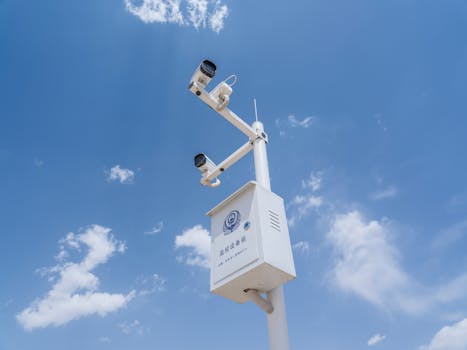
One of the most exciting advancements is the miniaturization of air quality sensors. Companies and research labs have developed compact sensors, some smaller than a matchbox, that can be easily deployed on streetlights, vehicles, drones, or even worn as personal devices.
For example, in 2022, a European consortium deployed over 5,000 AI-enabled sensors across Barcelona, resulting in a hyperlocal air quality map with minute-by-minute updates. These distributed networks offer several key advantages:
- Dense coverage: A single city can deploy thousands of sensors for granular insights. - Real-time data: Instantaneous updates allow for rapid response to pollution spikes. - Mobility: Sensors on buses, bikes, or delivery vehicles provide dynamic air quality mapping.Miniaturized sensors, often costing less than $200 each, are now within reach for schools, businesses, and even individuals — democratizing access to high-quality air data previously reserved for government agencies.
Edge AI: Intelligent Processing at the Source
A significant leap forward is the integration of edge AI — that is, machine learning models running directly on the sensor device, rather than relying on cloud-based analytics. Edge AI offers several advantages:
- Lower latency: Sensors can rapidly detect hazardous conditions and trigger alerts within milliseconds. - Reduced data transmission: Only essential or anomalous data is sent to the cloud, saving bandwidth and energy. - Privacy: Sensitive environmental data, such as indoor air quality in homes or offices, can be processed locally without external exposure.For example, in 2023, a startup in California launched an edge AI-enabled sensor capable of detecting and classifying more than 20 different air pollutants with over 90% accuracy, all while consuming less than 1 watt of power. Such sensors are ideal for large-scale, battery-operated deployments in smart cities and industrial environments.
Self-Learning and Adaptive Calibration
Sensor drift and calibration have been persistent challenges in air quality monitoring. Traditional sensors require regular manual calibration to maintain accuracy, leading to maintenance costs and downtime. AI-enabled sensors, however, are now employing self-learning algorithms to overcome these issues.
Recent innovations include:
- Continuous self-calibration: Sensors use reference data (from official stations or mobile calibration units) to automatically adjust their readings. - Environmental adaptation: Machine learning models account for temperature, humidity, and other environmental variables that affect sensor performance. - Anomaly detection: AI models can identify when a sensor is malfunctioning or exposed to unexpected sources of interference.According to a 2023 study by MIT, AI-driven calibration improved low-cost sensor accuracy by up to 30% compared to uncalibrated devices, making them suitable for regulatory and scientific use.
Enhanced Data Visualization and Predictive Analytics
Collecting air quality data is only part of the solution; making sense of it is equally important. The latest AI-enabled platforms offer sophisticated visualization and predictive analytics tools for various users:
- Real-time heatmaps: Interactive maps show pollution hotspots down to the street level. - Trend analysis: AI models identify long-term trends, such as seasonal patterns or the impact of traffic policies. - Forecasting: Advanced algorithms predict air quality hours or even days ahead, allowing for proactive interventions.For instance, Singapore’s National Environment Agency launched an AI-powered forecasting system in 2022 that accurately predicted haze events up to 48 hours in advance, helping residents and businesses prepare.
Comparing Traditional vs. AI-Enabled Air Quality Monitoring
To better understand the impact of these innovations, consider the following comparison between traditional and AI-enabled air quality monitoring sensors:
| Feature | Traditional Sensors | AI-Enabled Sensors |
|---|---|---|
| Accuracy | High (but limited to few locations) | High, with self-calibration and adaptive learning |
| Coverage | Low (typically 1-2 stations per city) | High (hundreds to thousands of nodes) |
| Data Frequency | Hourly or daily | Real-time (seconds to minutes) |
| Maintenance | Requires frequent manual calibration | Self-calibrating, lower maintenance |
| Cost | $10,000–$100,000 per station | $100–$1,000 per sensor |
| Analytics | Manual data review | Automated, predictive, and actionable |
Real-World Impact and Future Directions
AI-enabled air quality sensors are already delivering tangible benefits across the globe:
- In New Delhi, a city with some of the world’s worst air pollution, a network of 2,500 AI-powered sensors provides hourly updates that inform traffic restrictions and school closures. - In London, portable AI sensors help asthma patients monitor their personal exposure and adjust routes or activities accordingly. - In California’s wine country, vineyards are using AI sensors to monitor wildfire smoke, protecting crops and guiding harvest decisions.Looking ahead, researchers are exploring new frontiers such as:
- Integrating AI air quality data with health records for personalized health recommendations. - Using AI to identify pollution sources in real time, such as illegal burning or industrial leaks. - Combining air quality sensors with weather and satellite data for multi-layered environmental insights.By 2030, the global air quality monitoring market is projected to surpass $8 billion, with AI and smart sensors driving much of this growth.
Final Thoughts on AI-Enabled Air Quality Monitoring Sensors
The fusion of artificial intelligence and air quality monitoring sensors represents a transformative leap forward in environmental science and public health. With the ability to provide real-time, hyperlocal, and highly accurate insights, these innovations are empowering cities, industries, and individuals to make informed decisions and take action like never before.
From miniaturized, self-learning sensor networks to edge AI analytics and predictive forecasting, the latest technologies are overcoming the traditional barriers of cost, coverage, and complexity. As adoption accelerates and new applications emerge, AI-enabled air quality monitoring is set to play a crucial role in creating healthier, more sustainable communities for generations to come.