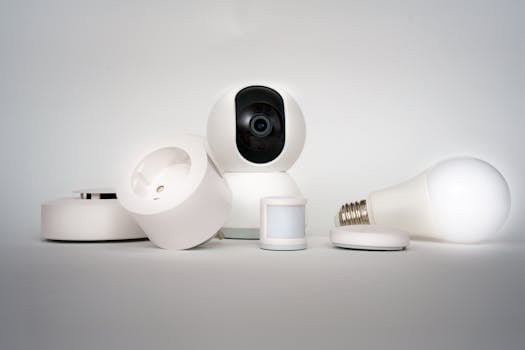
The promise of a fully automated, intelligent home is no longer a vision of the future—it's rapidly becoming a reality thanks to AI-enabled sensors. From lights that anticipate your needs to climate systems that learn your patterns, artificial intelligence is transforming how we interact with our living spaces. But with the dizzying array of AI-powered sensors on the market, how do you select the right ones for your home automation goals? This comprehensive guide will help you navigate the choices, understand the key features, and make confident decisions for a smarter, more responsive home.
Understanding AI-Enabled Sensors: What Sets Them Apart?
Traditional sensors in home automation detect simple changes—motion, temperature, humidity, or light—and trigger basic responses. AI-enabled sensors, however, add a powerful new dimension. By incorporating machine learning algorithms, these sensors analyze collected data, recognize patterns, and make predictions or decisions. For example, instead of just detecting movement, an AI-powered sensor can distinguish between a pet, a person, or even identify specific members of your household by their gait.
This intelligence leads to several advantages:
- Improved accuracy: AI reduces false alarms by learning the difference between normal and unusual activity. According to a 2023 Statista report, AI-powered motion sensors cut false alarms by up to 60% compared to conventional models. - Adaptive automation: Sensors can modify their behavior based on your habits, such as adjusting lighting or HVAC automatically as your routine changes. - Enhanced interoperability: Many AI sensors communicate seamlessly with other connected devices, creating complex automation scenarios.Understanding these core capabilities is crucial as you begin the selection process.
Key Factors to Consider When Choosing AI-Enabled Sensors
Selecting AI-enabled sensors is not just about buying the latest gadget. Here are the most important considerations:
1. $1 Ensure sensors are compatible with your home automation platform (e.g., Apple HomeKit, Google Home, Amazon Alexa, Samsung SmartThings). Some sensors are locked to specific ecosystems, while others support multiple platforms through standards like Zigbee, Z-Wave, or Matter. 2. $1 Decide what you want to automate: security, lighting, climate, or energy management? Popular categories include: - Motion and presence sensors - Environmental sensors (temperature, humidity, air quality) - Contact sensors (doors and windows) - Voice-activated sensors 3. $1 Not all AI sensors are created equal. Some offer basic pattern recognition, while others employ deep learning for advanced features like facial recognition or behavior prediction. Look for information on training models, update frequency, and whether the AI processing is done locally or in the cloud. 4. $1 AI sensors process a lot of personal data. According to a 2022 Deloitte survey, 44% of smart home users cite privacy as a major concern. Prefer sensors with robust security protocols, local data processing, and transparent privacy policies. 5. $1 Consider whether the sensor is battery-powered or wired, its installation complexity, and how often it requires maintenance or software updates. 6. $1 AI-enabled sensors are generally more expensive than basic models. Evaluate whether advanced features justify the added cost, especially for larger deployments.Comparing Popular AI-Enabled Sensor Types for the Smart Home
To help clarify the landscape, here’s a comparison table of common AI-enabled sensor types, their main uses, and typical AI features:
| Sensor Type | Main Application | Typical AI Feature | Approximate Price Range (USD) |
|---|---|---|---|
| AI Motion/Presence Sensor | Security, lighting automation | Human vs. pet detection, behavioral learning | $40-$120 |
| AI Environmental Sensor | Climate control, air quality monitoring | Predictive temperature adjustment, air quality forecasting | $60-$200 |
| AI Camera Sensor | Security surveillance | Facial recognition, anomaly detection | $100-$300 |
| AI Voice Sensor | Voice assistants, command recognition | Contextual understanding, noise filtering | $50-$250 |
| Smart Contact Sensor | Doors and windows, security | Usage pattern analysis, alert optimization | $25-$60 |
This table illustrates both the range of available sensors and the diversity of AI capabilities designed to enhance the user experience.
Evaluating AI Performance: What to Look For in Real-World Use
A sensor’s technical specifications only tell part of the story. Real-world performance is where AI-enabled sensors truly stand out—or fall short. Consider these factors:
- $1 How often does the sensor correctly interpret events? For example, a high-end AI motion sensor like the ecobee SmartSensor has been shown to achieve over 95% accuracy in distinguishing between people, pets, and background motion. - $1 Latency matters. AI sensors processing data locally (on the device) typically react faster—often under 100 milliseconds—than those relying on cloud-based AI, which may introduce delays. - $1 Some AI sensors improve over time, learning your household routines. Check user reviews or manufacturer documentation for information on how quickly and effectively the AI adapts. - $1 Does the sensor support advanced automation, like conditional triggers (e.g., “If the front door opens after 10 p.m. and no one is home, turn on all lights”)? This flexibility distinguishes basic sensors from truly intelligent ones. - $1 AI models improve through updates. Opt for brands with a strong track record of providing regular firmware and AI model updates, ensuring your sensors remain effective as technology evolves.Balancing Privacy and Convenience in AI-Enabled Home Sensors
AI’s ability to analyze and learn from your personal habits raises important privacy considerations. As smart homes become more sophisticated, protecting data becomes paramount. Here’s how to strike the right balance:
- $1 Local processing means your data stays in your home, reducing privacy risks. Devices like Apple’s HomePod Mini process voice commands locally whenever possible. Cloud-based AI can offer more powerful analysis but may expose data to third-party servers. - $1 Choose sensors that encrypt data both at rest and in transit. Check if the device allows you to control who can access data or review logs of sensor activity. - $1 Reputable brands publish clear privacy policies, explaining what data is collected, how it’s used, and whether it’s shared. Avoid products with vague or missing privacy information. - $1 Look for sensors that let you adjust sensitivity, data sharing, and AI features. For example, some smart cameras allow you to disable facial recognition or limit recording to specific times.According to the Consumer Technology Association, 58% of smart home device buyers rank privacy as their top concern, so don’t hesitate to prioritize it when making your selection.
Planning for the Future: Scalability and Upgradability
Home automation is rarely static. As your needs evolve, so should your technology. When choosing AI-enabled sensors, think ahead:
- $1 Opt for platforms that support adding new sensors or upgrading existing ones without a complete overhaul. Systems based on open standards like Matter or Zigbee are more future-proof. - $1 Ensure your sensors can receive over-the-air updates. Brands such as Google Nest and Philips Hue regularly introduce new AI features via software updates, extending product lifespan. - $1 As you expand your smart home, will your sensors work with new devices or services? For example, an AI environmental sensor might eventually trigger your smart blinds or irrigation system as part of a broader automation scenario. - $1 A 2023 Parks Associates report found that the average U.S. home with automation features contains 15 connected devices—a number expected to rise to 25 by 2026. Choosing scalable, upgradable sensors now can save money and hassle later.Making Smart Choices: A Step-by-Step Approach
With so many factors to consider, here’s a step-by-step approach to choosing the right AI-enabled sensors for your home automation:
1. $1 Decide what you want to automate (security, energy savings, comfort, etc.). 2. $1 Check compatibility with your existing smart home platform and devices. 3. $1 List must-have AI features (like facial recognition, environmental forecasting, or adaptive lighting). 4. $1 Remember installation, potential subscription fees, and future scalability. 5. $1 Look for user feedback on reliability, privacy, and AI performance. 6. $1 Start with a few sensors in key locations before committing to a full-scale rollout. 7. $1 Keep track of performance, update software, and fine-tune automations for optimal results.Smart Home Sensor Selection: Final Thoughts
Choosing the right AI-enabled sensors is a critical step toward creating a home that’s not just automated, but truly intelligent and responsive to your needs. By understanding the key differences between sensor types, weighing privacy and performance, and planning for future expansion, you can build a smart home ecosystem that’s both powerful and secure. As AI technology continues to advance, investing in capable, adaptable sensors will ensure your home remains at the cutting edge of convenience, safety, and energy efficiency.