Artificial intelligence (AI) has become a transformative force across numerous industries, but one of its most intriguing integrations is with the humble accelerometer. Once just a simple sensor for detecting motion, accelerometers are now being supercharged with AI capabilities, enabling smarter, context-aware devices in everything from smartphones to industrial machinery. But how exactly do artificial intelligence accelerometers work, and in what practical ways are they being used today? This article unpacks the science, inner workings, and real-world applications of this cutting-edge technology.
Understanding Accelerometers: The Building Blocks
To appreciate the leap AI brings to accelerometers, it helps to first understand their fundamental purpose. An accelerometer is a sensor that measures acceleration forces, which can be static, like gravity, or dynamic, caused by movement or vibration. Traditional accelerometers work based on microelectromechanical systems (MEMS) technology. They rely on tiny mechanical structures that deflect when subjected to acceleration, producing an electrical signal that can be measured.
Key facts about conventional accelerometers: - The global market for accelerometers was valued at over $2.2 billion in 2022, with rapid growth expected due to IoT and wearable tech demand. - MEMS accelerometers can detect forces as small as a few micro-g (millionths of the force of gravity). - They are used in airbag deployment systems, fitness trackers, drones, and more.However, while these sensors are excellent at measuring motion, they can generate massive amounts of raw data, often requiring powerful processors to analyze and interpret in real time. This is where AI comes into play.
How Artificial Intelligence Enhances Accelerometers
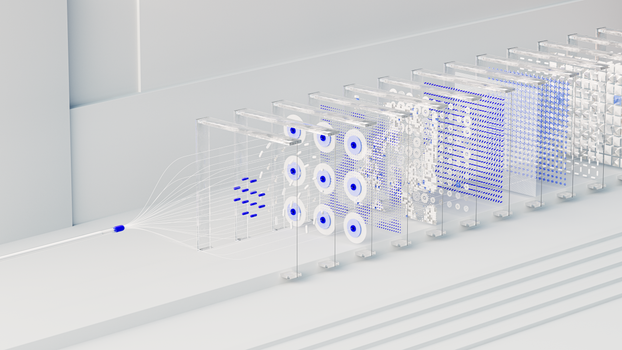
Artificial intelligence accelerometers are essentially smart sensors with built-in machine learning (ML) capabilities. Unlike traditional models, these devices can analyze motion data on the edge—that is, directly within the sensor or its immediate circuitry—without needing to transmit raw data to a central processor or cloud.
Here’s how AI accelerometers function: 1. $1: The sensor collects acceleration data as usual. 2. $1: AI algorithms, typically lightweight neural networks, are embedded directly in the sensor. 3. $1: The AI model has been trained to recognize specific motion patterns, such as a fall, a particular gesture, or an abnormal vibration. 4. $1: Instead of raw data, the accelerometer outputs high-level insights, such as “fall detected” or “machine needs maintenance.”This approach dramatically reduces latency, power consumption, and bandwidth requirements—critical advantages in battery-powered or real-time applications.
A notable example is STMicroelectronics' LSM6DSOX, an AI-enabled MEMS accelerometer and gyroscope. It features an integrated machine learning core that can classify up to eight different user activities in real time, all within a tiny, low-power chip.
Advantages Over Traditional Accelerometers
AI accelerometers offer several significant benefits compared to their traditional counterparts. Here’s a side-by-side comparison:
| Feature | Traditional Accelerometer | AI Accelerometer |
|---|---|---|
| Data Processing | Raw data sent to external processor | On-sensor, real-time analytics |
| Power Consumption | Higher (due to external compute) | Lower (less data transmission) |
| Latency | Higher (depends on processor speed and data transfer) | Ultra-low (microseconds to milliseconds) |
| Context Awareness | Limited, requires external analysis | High, can distinguish activities/events on-device |
| Privacy | Raw data may be transmitted/stored | Only high-level results sent, enhancing privacy |
One study found that AI accelerometers could reduce event detection latency by up to 90% in wearable devices, with energy savings of 30-50%, compared to traditional architectures.
Practical Applications of AI Accelerometers in Everyday Life
The marriage of AI and accelerometers is unlocking new possibilities across many fields. Here are some of the most impactful real-world applications:
1. $1 AI accelerometers are powering the next generation of fitness trackers and smartwatches. Instead of merely counting steps, these devices can now accurately detect complex activities (such as cycling, swimming, or yoga), monitor for falls in elderly users, and even spot early signs of medical conditions like Parkinson’s disease by analyzing subtle movement patterns.For example, the Apple Watch Series 8 uses AI-driven motion sensors to detect car crashes and hard falls, triggering emergency services if needed.
2. $1 Advanced AI accelerometers allow for gesture-based controls, such as waking a device with a specific wrist movement or silencing a call with a shake. They also support augmented reality experiences by providing precise, low-latency motion tracking. 3. $1 In factories, AI accelerometers monitor motors, pumps, and other equipment for unusual vibrations. By recognizing the signatures of wear or malfunction in real time, they enable predictive maintenance—fixing problems before costly breakdowns occur. General Electric reports that predictive maintenance powered by smart sensors can reduce maintenance costs by up to 30% and decrease breakdowns by 70%. 4. $1 Modern vehicles employ AI accelerometers for features like automatic crash detection, driver drowsiness monitoring, and theft alerts. By distinguishing between normal driving and dangerous events, these sensors are making cars safer and smarter. 5. $1 Professional athletes use AI accelerometer-equipped wearables to analyze their movements, improve technique, and prevent injuries. In rehabilitation, these sensors track patient progress and ensure exercises are performed correctly.The Technology Behind AI Accelerometers: Embedded Machine Learning
The secret sauce of AI accelerometers lies in their ability to run machine learning models directly on the sensor hardware. This is made possible by advances in ultra-low-power microcontrollers and tinyML (tiny machine learning), which enables neural networks to operate within the strict energy and memory constraints of sensors.
- $1: The AI model is first trained on large datasets—such as thousands of labeled movement patterns—on a powerful computer. - $1: The trained model is then compressed and optimized for size and efficiency, sometimes shrinking to just a few kilobytes. - $1: The compressed model is loaded onto the accelerometer chip, where it processes new data in real time.A leading example is Bosch Sensortec’s BMA456, which comes with embedded activity recognition algorithms. The sensor can differentiate between walking, running, standing, and biking—all with a power draw of less than 150 microamperes.
Challenges and Future Prospects of AI Accelerometers
Despite their promise, AI accelerometers face several challenges:
- $1: AI models trained for specific activities may fail in new contexts, requiring frequent retraining or adaptation. - $1: On-sensor AI raises new security concerns, such as the risk of adversarial attacks or data manipulation. - $1: There is still a lack of universal standards for implementing and benchmarking AI in sensors.Nevertheless, the future is bright. According to Yole Intelligence, the market for AI-enabled sensors—including accelerometers—could reach $5.2 billion by 2027, driven by advancements in edge AI, IoT, and healthcare technologies.
Emerging trends to watch include: - $1: Future devices may adapt and retrain themselves on the fly, improving accuracy over time. - $1: Combining AI accelerometers with gyroscopes, magnetometers, and environmental sensors for richer, context-aware insights. - $1: New semiconductor designs promise to shrink energy use even further, enabling always-on sensing in tiny devices.Key Takeaways: The Growing Impact of AI Accelerometers
Artificial intelligence has revolutionized the capabilities of accelerometers, turning them from simple motion detectors into sophisticated, context-aware devices. By embedding machine learning directly onto the sensor, AI accelerometers deliver real-time, actionable insights with minimal power and bandwidth requirements. Their impact is being felt in health, industry, automotive safety, and beyond, with new applications emerging as technology advances.
As AI accelerometers continue to evolve, they are set to play a critical role in shaping the future of smart devices, wearables, and the broader Internet of Things—making our environments safer, more responsive, and more intelligent.