Artificial intelligence (AI) is transforming the industrial landscape, and at the heart of this revolution are AI-powered sensors. These intelligent devices are the eyes, ears, and even “nerves” of modern factories, empowering machines and systems to perceive, learn, and act with unprecedented precision. But how exactly do artificial intelligence sensors work in industrial applications? What sets them apart from traditional sensors? This article dives deep into the inner workings, real-world benefits, and future potential of AI sensors in industrial settings, giving you a comprehensive understanding of this cutting-edge technology.
The Evolution of Industrial Sensors: From Passive to Intelligent
For decades, industrial sensors have played a vital role in automation, monitoring, and control processes. Traditional sensors, such as thermocouples, pressure transducers, and proximity switches, perform basic functions: they detect physical quantities and send raw data to controllers. While essential, these conventional sensors are limited—they lack the ability to interpret data or adapt to changing environments.
The arrival of artificial intelligence has redefined what sensors can do. AI sensors combine hardware for data collection (like cameras, microphones, or accelerometers) with embedded processors running machine learning algorithms. Instead of simply relaying raw signals, AI sensors analyze, interpret, and even make decisions on the edge, close to the source of data.
Specific numbers illustrate the scope of this shift: According to MarketsandMarkets, the AI sensor market is projected to grow from $8.3 billion in 2022 to $22.1 billion by 2027, at a CAGR of 21.8%. This rapid adoption is driven by the promise of smarter, more adaptive industrial systems.
Core Components: How AI Sensors Gather and Interpret Data
The magic of AI sensors lies in their architecture—a blend of sophisticated hardware and intelligent software. Here’s how they work in practice:
1. $1: Just like traditional sensors, AI sensors start by detecting environmental parameters. This could be temperature, vibration, sound, pressure, chemical composition, or images. 2. $1: The analog signals from the sensing elements are converted into digital data suitable for processing. 3. $1: This is where AI comes in. Embedded microprocessors or microcontrollers run machine learning models trained on large datasets. These models can recognize patterns, classify events, detect anomalies, or predict future states. 4. $1: AI sensors often perform analytics locally (“on the edge”), minimizing latency and reducing the need to send vast amounts of data to the cloud. 5. $1: Processed data, insights, or alerts are transmitted to industrial control systems, human operators, or cloud platforms, usually via protocols like Ethernet, Wi-Fi, or industrial fieldbus.A practical example: In a predictive maintenance scenario, an AI vibration sensor on a motor doesn’t simply report vibration levels. It monitors the vibration signature, compares it to patterns associated with specific faults, and predicts when a failure might occur—enabling proactive maintenance.
Types of AI Sensors and Their Industrial Roles
AI sensors come in many forms, tailored for various industrial applications. Here are some key categories and examples:
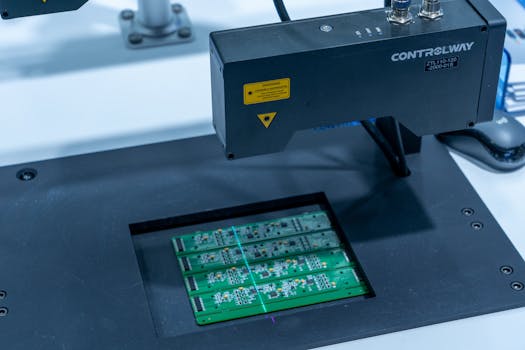
- $1: These combine cameras with deep learning algorithms, enabling real-time image classification, object detection, and quality inspection on production lines. For instance, an AI vision sensor can spot defects on a fast-moving conveyor, classifying products as “pass” or “fail” in milliseconds. - $1: Equipped with microphones and neural networks, these sensors “listen” to machinery and detect problems by analyzing sound signatures. A 2021 case study found that AI acoustic sensors improved fault detection in pumps with 92% accuracy compared to 70% using conventional methods. - $1: Used in process industries, they analyze multiple gas signatures simultaneously and detect hazardous leaks faster by learning from historical incident data. - $1: These monitor rotating equipment, conveyors, and robotics. AI models spot subtle changes in vibration patterns, often predicting failures weeks in advance.The following table offers a comparison of traditional sensors versus AI-powered sensors in industrial contexts:
| Feature | Traditional Sensors | AI Sensors |
|---|---|---|
| Data Output | Raw measurements (e.g., voltage, frequency) | Interpreted events, anomalies, predictions |
| Data Processing | Centrally (PLC or cloud) | Locally (on the edge) |
| Adaptability | Static thresholds | Dynamic, self-learning |
| Maintenance Needs | Manual calibration | Self-calibration, condition monitoring |
| Example Use | Simple alarm on high temperature | Predictive alert for overheating before failure |
Key Industrial Applications: Real-World Impact
AI sensors are creating measurable value across a range of industrial sectors. Here are some leading applications:
1. $1: According to Deloitte, predictive maintenance enabled by AI sensors can reduce unplanned downtime by up to 30% and extend equipment life by 20%. For instance, oil refineries deploy AI vibration and acoustic sensors on pumps and compressors to detect signs of wear, preventing catastrophic breakdowns. 2. $1: In automotive and electronics manufacturing, AI vision sensors inspect thousands of components per hour. They not only detect surface flaws, but also learn to identify new defect types, ensuring consistent product quality and reducing waste. 3. $1: AI sensors monitor environmental conditions (toxic gases, heat, noise) and worker movements. In mining, AI-equipped helmets alert workers and supervisors to hazardous gas exposure, reducing accidents. 4. $1: Smart factories use AI sensors to monitor energy consumption patterns. In 2023, a German automotive plant reported a 12% reduction in electricity usage after deploying AI sensors to optimize lighting and HVAC systems. 5. $1: AI sensors enable collaborative robots (cobots) to safely work alongside humans. For example, force and vision sensors equipped with AI algorithms help robots adjust their grip and path in real time.Challenges and Considerations in Deploying AI Sensors
While the benefits are substantial, integrating AI sensors into industrial environments presents challenges:
- $1: AI models require vast amounts of high-quality training data. In some legacy plants, historical sensor data may be incomplete or inconsistent. - $1: Retrofitting AI sensors into existing automation systems requires careful planning. Compatibility with industrial protocols and cybersecurity are key considerations. - $1: Although prices are dropping, AI sensors are generally more expensive than traditional sensors. Companies must analyze ROI and consider phased deployments. - $1: Operating and maintaining AI-enabled systems demands new skills, including data science and AI model management. Workforce training becomes essential. - $1: AI models can sometimes misclassify events, especially in novel situations. Building confidence in AI-driven decisions is an ongoing process.The Future Outlook: Smarter, Safer, and More Efficient Industry
The trajectory for AI sensors in industry is clear: more intelligence, more autonomy, and broader adoption. According to a 2023 Gartner report, by 2026, over 50% of industrial IoT sensor shipments will include onboard AI capabilities, up from just 15% in 2022.
Emerging trends include:
- $1: Enabling sensors in different plants or machines to collaboratively learn without exchanging raw data, enhancing privacy and accelerating model improvements. - $1: AI sensors will not only detect faults but also trigger automated corrective actions, enabling “lights-out” factories that run with minimal human intervention. - $1: Advancements in ultra-compact AI models (TinyML) allow complex analytics on even the smallest, battery-powered sensors.As AI sensors mature, they will unlock new levels of efficiency, safety, and sustainability—paving the way for the truly autonomous factory of the future.