Artificial intelligence (AI) is transforming industries in ways once thought impossible, and its influence on sensor technology is particularly profound. In the realm of smart measurement, AI is not just an add-on—it is fundamentally reshaping how sensors are designed, deployed, and utilized. This article explores how AI is accelerating the innovation of sensors for smart measurement, delving into the new capabilities, efficiencies, and challenges that arise when machines learn to interpret the world with unprecedented precision.
How Artificial Intelligence is Redefining Sensor Design
Traditional sensors are built to detect and measure physical variables—temperature, pressure, humidity, light, and more. For decades, the primary focus was on improving hardware sensitivity, range, and robustness. With the rise of AI, however, sensor design is taking a radical new direction.
AI algorithms can now be embedded directly into sensor hardware (edge AI), enabling devices to preprocess, analyze, and even act on data locally. This means sensors no longer just pass raw data to a central server; they interpret and evaluate information in real time. For example, smart cameras with AI can distinguish between a person and a tree in milliseconds, reducing false alarms in security systems.
Moreover, AI-driven design leverages machine learning to optimize sensor placement, minimize energy consumption, and predict maintenance needs. In 2023, the global market for AI-enabled sensors was valued at $13.6 billion, and it’s projected to reach $38.4 billion by 2028, indicating rapid adoption and innovation in this domain.
AI-Enabled Data Fusion: Combining Multiple Senses for Smart Measurement
One of the most significant impacts of AI on sensor technology is the ability to synthesize data from multiple sources, a process known as data fusion. AI algorithms can correlate readings from different types of sensors—such as visual, acoustic, and thermal—to create a more comprehensive and accurate measurement of an environment or process.
For example, in industrial manufacturing, combining vibration, temperature, and acoustic sensors with AI helps detect equipment anomalies long before failure occurs. A 2021 study by MarketsandMarkets found that AI-enhanced data fusion improves fault detection accuracy by up to 35% compared to single-sensor systems.
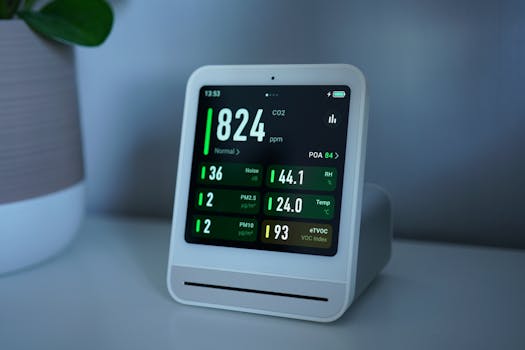
In environmental monitoring, AI-driven data fusion allows for more nuanced pollution tracking by integrating data from air quality, weather, and traffic sensors. This leads to smarter, more responsive urban planning and healthier cities.
To illustrate the advantages, here’s a comparison of traditional versus AI-powered sensor systems:
| Feature | Traditional Sensors | AI-Enabled Sensors |
|---|---|---|
| Data Processing | Centralized, often delayed | Edge processing, real-time |
| Fault Detection Accuracy | Moderate (single-sensor limitations) | High (multi-sensor data fusion) |
| Energy Efficiency | Lower (continuous transmission) | Higher (data pre-filtering) |
| Maintenance Prediction | Reactive (after failure) | Predictive (before failure) |
| Scalability | Limited by bandwidth and data volume | Enhanced by local processing |
Self-Calibration and Adaptive Sensing: AI’s Role in Enhancing Accuracy
Sensor accuracy is crucial in applications ranging from medical diagnostics to industrial automation. Traditionally, maintaining accuracy required frequent manual calibration, which is costly and time-consuming.
AI changes this paradigm through self-calibration and adaptive sensing. By continuously learning from historical data, AI algorithms can identify drift, compensate for sensor aging, and adapt to changing environmental conditions. This capability is especially valuable in harsh or remote environments, such as offshore oil rigs or autonomous vehicles.
A compelling example is the use of AI in glucose monitoring sensors for diabetes management. These sensors now use machine learning models to adjust for individual metabolic variations, yielding more reliable, personalized readings and reducing the incidence of false alerts.
According to a 2022 report by the International Society of Automation, AI-powered self-calibration can extend sensor lifespans by up to 40% and cut maintenance costs by 30%, offering significant operational savings.
Enabling New Applications: From Predictive Maintenance to Smart Health
The infusion of AI into sensor technology is not just about improving existing measurement tasks—it’s about enabling entirely new applications. Predictive maintenance is one domain where AI-powered sensors are revolutionizing operations. By continuously monitoring equipment health and learning from complex data patterns, AI can forecast failures days or weeks in advance, drastically reducing downtime in manufacturing plants.
In healthcare, AI-driven smart sensors are enabling real-time patient monitoring, early disease detection, and even personalized therapy adjustments. For instance, wearable biosensors equipped with AI can detect subtle changes in heart rate variability that signal the onset of cardiac issues, prompting early intervention.
The automotive industry is also experiencing a transformation. Lidar and radar sensors, enhanced with AI, empower autonomous vehicles to make split-second decisions based on ever-changing road conditions. According to Statista, the number of AI-powered sensors in vehicles is expected to surpass 1.2 billion units globally by 2026.
Challenges and Ethical Considerations in AI-Driven Sensor Development
While the benefits are substantial, the integration of AI into smart measurement sensors also brings challenges. Data privacy tops the list; as sensors become more capable of interpreting and acting on sensitive information, ensuring robust security protocols is essential. The risk of biased algorithms is another concern—if AI models are trained on non-representative data, sensor outputs can become unreliable or even discriminatory.
There is also the question of transparency. As sensors make more autonomous decisions, it becomes harder for users and regulators to understand how those decisions are made. This “black box” effect can erode trust unless manufacturers provide clear explanations of AI processes.
Finally, the rapid pace of innovation creates a skills gap. Developing and maintaining AI-enabled sensor systems require expertise in both hardware engineering and data science, leading to strong demand for multidisciplinary talent.
Looking Ahead: The Future of AI and Smart Measurement Sensors
The synergy between artificial intelligence and smart measurement sensors is only beginning to be realized. In the coming years, we can expect sensors to become even more autonomous, context-aware, and integrated into everyday environments. Emerging trends include the growth of “sensor as a service” platforms, where businesses access real-time measurement data via cloud-based APIs, and the deployment of self-organizing sensor networks that collaborate to solve complex problems.
Quantum sensors integrated with AI may soon provide breakthroughs in fields like medical imaging and climate science, offering sensitivity levels previously out of reach. Meanwhile, regulatory frameworks and ethical standards will need to evolve in tandem, ensuring that these powerful new technologies are deployed responsibly for the benefit of all.