Smart cities are rapidly transforming how urban environments operate, aiming for sustainability, efficiency, and improved quality of life. At the heart of this transformation is an extensive network of sensors—critical components that collect and transmit data, enabling smarter decision-making. But with so many sensor types available, how do city planners and technologists decide which are the best for specific applications? In this article, we’ll compare the leading types of sensors used in smart cities, examine their strengths and limitations, and provide guidance on choosing the right sensor for different municipal needs.
The Role of Sensors in Smart City Infrastructure
Sensors serve as the “nervous system” of a smart city, collecting real-time data that supports everything from traffic management to environmental monitoring. In 2022, the global smart sensor market was valued at $41.2 billion and is projected to reach $97.5 billion by 2027, according to MarketsandMarkets. This explosive growth demonstrates the increasing reliance on sensor technology for urban innovation.
Smart cities deploy a wide range of sensors, each tailored to monitor specific phenomena:
- Environmental sensors track air quality, noise, and weather. - Traffic sensors monitor vehicle and pedestrian flow. - Utility sensors manage water, electricity, and waste systems. - Structural sensors ensure the safety of bridges and buildings. - Surveillance and public safety sensors enhance security.Selecting the ideal sensor depends on factors such as accuracy, durability, maintenance needs, and cost. Let’s explore the most common sensor types used in smart cities and compare their capabilities.
Environmental Sensors: Monitoring Urban Health
Environmental sensors are essential for tracking pollution, temperature, humidity, and other atmospheric conditions. The most prevalent types include air quality sensors, weather sensors, and noise sensors.
Air quality sensors typically utilize electrochemical or optical methods to measure pollutants like PM2.5, NO2, CO, and ozone. For instance, the city of Barcelona installed over 100 air quality sensors to monitor pollution levels, leading to improved public health interventions.
Noise sensors, often based on microphones with advanced signal processing, help cities identify noise hotspots and enforce regulations. In New York City, the "SONYC" project deployed over 45 noise sensors that helped reduce noise complaints by 23% in targeted neighborhoods.
Weather sensors, including temperature, humidity, and barometric pressure monitors, are crucial for managing municipal responses to weather events. These sensors often use thermistors, capacitive humidity sensors, and piezoelectric barometers.
Key considerations for environmental sensors:
- Sensitivity to specific pollutants or parameters. - Calibration and maintenance frequency. - Integration with data analytics platforms.Traffic and Mobility Sensors: Keeping Cities Moving
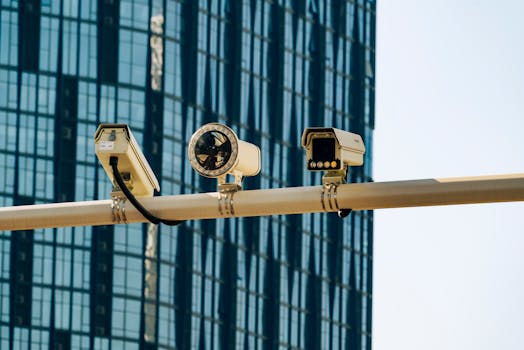
Efficient traffic flow is vital for smart cities, and sensors play a central role in achieving this. The most popular types include inductive loop sensors, radar sensors, and video analytics cameras.
Inductive loop sensors are embedded in roadways to detect passing vehicles via changes in electromagnetic fields. They are highly accurate (over 95% detection rate) and widely used in traffic lights and toll collection systems.
Radar sensors, installed on poles or overpasses, use radio waves to detect vehicle speed and volume. These are less intrusive than embedded loops and function well in adverse weather.
Video analytics cameras leverage computer vision to count vehicles and pedestrians, recognize license plates, and assess congestion. While these systems can provide richer data, they require robust processing power and raise privacy concerns.
In 2020, Singapore’s Land Transport Authority reported a 20% improvement in peak-hour traffic flow after deploying a combination of radar and video sensors.
Comparison of traffic sensor features:
| Sensor Type | Detection Accuracy | Maintenance | Cost | Best Use Case |
|---|---|---|---|---|
| Inductive Loop | 95%+ | High (requires roadwork) | Medium | Intersection control |
| Radar | 90-95% | Low | High | Speed monitoring |
| Video Analytics | 85-95% | Medium | High | Multi-modal analysis |
Utility and Infrastructure Sensors: Managing Resources Efficiently
Smart cities depend on sensors to optimize utilities like water, electricity, and waste disposal. Common sensor types in this domain include flow sensors, smart meters, and fill-level sensors.
Smart water meters, based on ultrasonic or electromagnetic sensing, provide real-time consumption data, enabling leak detection and conservation programs. In London, the Thames Water smart meter rollout led to a 17% drop in water usage among participating households.
Electricity smart meters use current and voltage sensors (often Hall effect or shunt resistors) to track energy use at a granular level. This data supports demand-response initiatives and renewable energy integration.
Fill-level sensors, using ultrasonic or infrared technology, help optimize waste collection routes by alerting when bins are full. In Barcelona, deploying fill-level sensors reduced waste collection costs by 25% and cut emissions from garbage trucks by 20%.
Key selection criteria for utility sensors:
- Communication protocols (LoRaWAN, NB-IoT, Zigbee). - Power consumption and battery life. - Environmental durability (waterproofing, temperature range).Structural Health Monitoring: Ensuring Urban Safety
Smart cities also use sensors to monitor the structural integrity of critical infrastructure such as bridges, tunnels, and high-rise buildings. The most common types are accelerometers, strain gauges, and fiber optic sensors.
Accelerometers detect vibrations and movements, identifying early signs of structural fatigue or seismic activity. For example, San Francisco’s Bay Bridge is equipped with over 250 accelerometers to monitor real-time stability.
Strain gauges measure deformation in materials, providing crucial information on stress and potential failure points. These are often bonded directly to beams or supports.
Fiber optic sensors, using changes in light transmission along cables, can simultaneously monitor temperature, strain, and vibrations over long distances. These are especially useful in large-scale infrastructure projects due to their immunity to electromagnetic interference.
Benefits of structural health sensors include:
- Early detection of safety risks. - Reduced maintenance costs through predictive analytics. - Improved public safety and disaster response.Public Safety and Surveillance Sensors: Balancing Security and Privacy
Safety is a top priority in any city, and sensors play a pivotal role in crime prevention, emergency response, and disaster management. Key technologies include surveillance cameras, gunshot detection sensors, and biometric access systems.
Surveillance cameras have evolved to include AI-powered video analytics, enabling automatic detection of suspicious behavior or abandoned objects. London’s “Ring of Steel” comprises over 500,000 cameras, which the Metropolitan Police credit with aiding in a 30% reduction in serious crimes in monitored areas.
Gunshot detection sensors like ShotSpotter use an array of acoustic sensors to triangulate the location of gunfire within seconds, drastically improving emergency response times. In Chicago, deployment of these sensors led to a 35% increase in the percentage of gunfire incidents responded to within 5 minutes.
Biometric sensors (facial recognition, fingerprint readers) are increasingly used in public access control, though they raise concerns about privacy and data security.
Major considerations for public safety sensors:
- Data privacy and ethical use. - Integration with law enforcement databases. - Reliability in diverse environmental conditions.Choosing the Right Sensor: Matching Technology to Urban Needs
With so many sensor options available, how do city planners select the best fit for a given application? The answer depends on several factors:
- Application specificity: Environmental, traffic, utility, structural, or safety. - Data accuracy requirements: Some use cases demand higher precision. - Installation environment: Indoor vs. outdoor, exposure to weather or contaminants. - Maintenance and lifecycle costs: Some sensors require frequent servicing. - Data integration: Compatibility with existing platforms and communication networks.No single sensor type is universally “the best”—rather, the right choice depends on the unique challenges and objectives of each smart city project. For example, inductive loop sensors are ideal for busy intersections, while fiber optic sensors are unmatched for monitoring long bridges.
Emerging trends include multi-sensor fusion (combining data from several sensor types), edge computing for real-time analytics, and increased focus on cybersecurity to protect sensitive urban data.
Looking Ahead: The Future of Sensors in Smart Cities
As urban populations swell—UN estimates predict 68% of the world’s people will live in cities by 2050—the role of sensors will only grow. Future advancements may include self-healing sensors, AI-driven anomaly detection, and energy harvesting sensors that eliminate battery replacement.
Collaboration between public agencies, private partners, and technology providers will be essential to ensure sensor deployments are cost-effective, secure, and aligned with community values. Ultimately, the best sensors are those that enable cities to become not just smarter, but also more livable, sustainable, and resilient.